ACL Reconstruction
The ACL does not heal when it tears. Reconstruction replaces it with a graft taken from your own hamstring or patellar tendon, threaded through tunnels in the bone. It is done for a knee that gives way, and the nine months of rehabilitation afterwards are as much a part of the treatment as the operation.
- Graft from your own tendon
- Arthroscopic, through small incisions
- Return to sport takes nine to twelve months
- Rehabilitation is the larger part
Stay
1 to 2 days
Duration
About 1 to 2 hours
Anaesthesia
Spinal or general
About ACL Reconstruction
Not every ACL tear needs reconstruction. Someone whose knee is stable in daily life may do well with rehabilitation alone. Surgery is for instability, particularly in people who pivot and turn in sport or work. The graft has to be incorporated by the body over months, which is why returning to sport too early is the commonest cause of re-rupture.
- Not every ACL tear needs surgery
- The graft is incorporated over months, not weeks
- Returning to sport too early is the main cause of re-rupture
- Meniscal tears are often repaired at the same time

Before you read on
Everything here is general information about acl reconstruction. Whether it suits you, and how it would be done in your case, is a decision for your doctor after examining you.
Your consultant's instructions always take precedence over anything written on this page.
When is it recommended?
Situations in which a doctor may suggest acl reconstruction.
- ACL tear with the knee giving way
- Athletes and people whose work involves pivoting
- Combined ACL and meniscal injury
- Failed rehabilitation after an ACL tear
- Recurrent instability after a previous injury
Procedure details
The usual sequence, from first consultation through to follow-up.
Assessment and prehabilitation
Examination and MRI confirm the tear. Swelling is settled and movement restored before surgery, which improves the result.
Surgery
A graft is taken from your own tendon, tunnels are drilled in the bone arthroscopically, and the graft fixed in place.
Early recovery
Weight bearing with crutches from the first day, with early focus on regaining full straightening and quadriceps control.
Staged rehabilitation
Strength, then agility, then sport-specific work over nine to twelve months, with return to sport based on testing rather than time alone.
How to prepare
What to sort out before you come in.
- Prehabilitation matters: settle swelling and regain full movement before surgery
- Bring MRI films and reports
- Arrange crutches and prepare the home for limited mobility
- Understand the rehabilitation timeline before agreeing to surgery
- Arrange time away from sport realistically, not optimistically

Recovery
What to expect afterwards, and roughly when.
- Weight bearing with crutches from day one, usually off them within two to three weeks
- Full straightening of the knee is the early priority and must not be neglected
- Jogging usually around three to four months, pivoting sports at nine to twelve months
- Return to sport should be based on strength and hop testing, not on the calendar
- Re-rupture risk is highest in those who return early
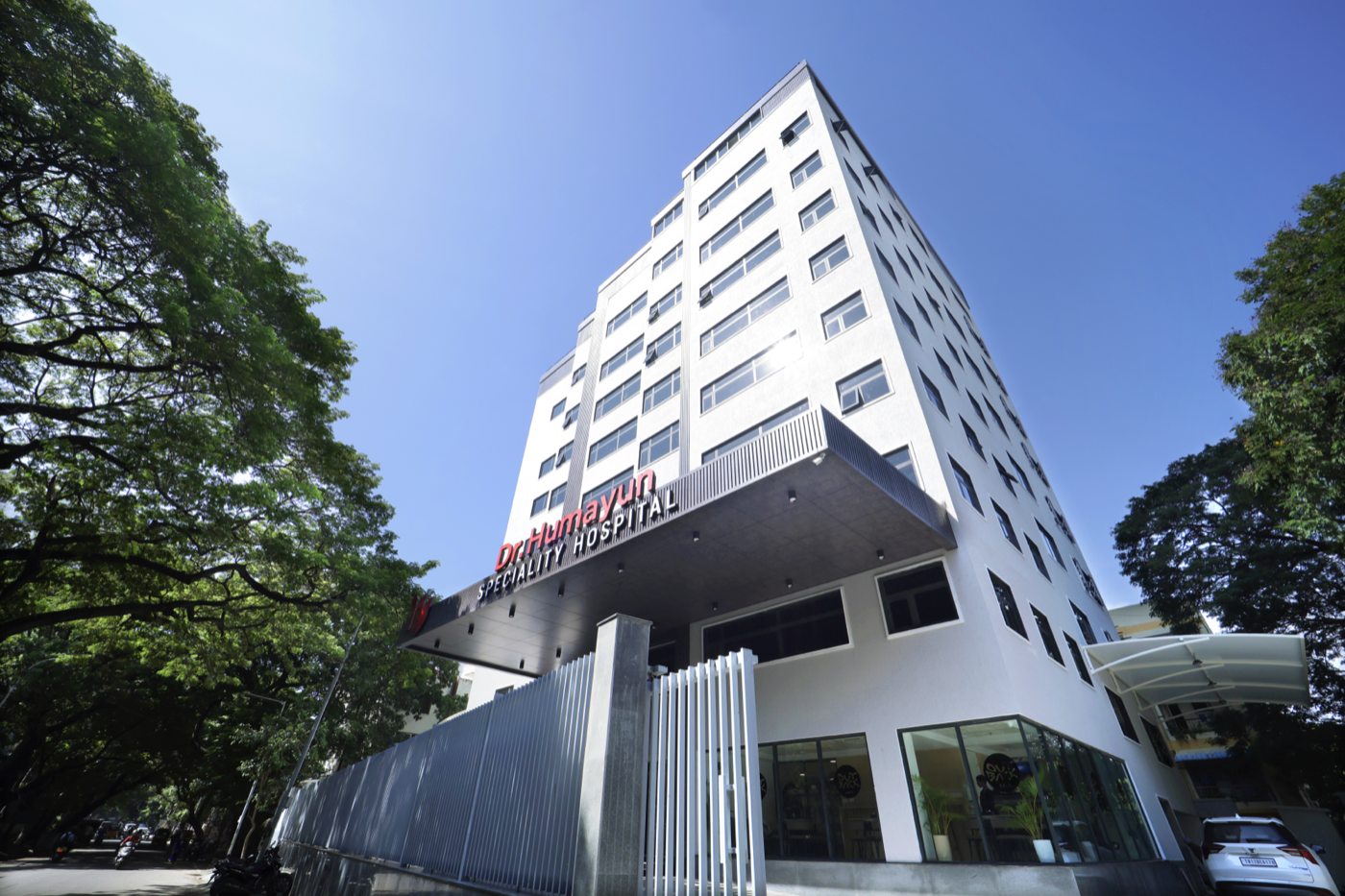
Why choose Humayun for ACL reconstruction
An ACL reconstruction is nine months of rehabilitation with an operation at the start.
- Prehabilitation before surgery, because operating on a stiff swollen knee gives a worse result
- The full timeline explained before you consent, since it decides whether the surgery is worth it for you
- Physiotherapy in the same building through the whole programme
- Return to sport based on strength and hop testing rather than on time elapsed
Your Health Matters
Take the next step towards better healthcare.
Connect with our experienced specialists and find the right care for you and your family.
More in Orthopaedics
Total Knee Replacement
Replacing worn knee joint surfaces with an implant, followed by a structured physiotherapy programme.
Arthroscopy
Keyhole surgery that lets the surgeon see inside a joint and repair damage through small incisions.
Total Hip Replacement
Replacement of a worn hip joint with an implant, for pain that has taken away walking, sleep and independence.
Revision Knee Replacement
Replacement of a knee implant that has worn, loosened or become infected, using components designed for revision.
Revision Hip Replacement
Replacement of a hip implant that has loosened, worn, dislocated repeatedly or become infected.
Knee Arthroscopy
Keyhole surgery on the knee through small incisions, used to repair cartilage, trim tears and treat locking.
Shoulder Arthroscopy
Keyhole surgery on the shoulder for rotator cuff tears, impingement, instability and frozen shoulder.
Meniscal Surgery
Repair or trimming of a torn meniscus, the cartilage cushion in the knee, done arthroscopically.
Fracture Fixation
Surgical stabilisation of a broken bone with plates, screws or wires, so it heals in the right position.
Intramedullary Nailing
A metal rod passed down the centre of a long bone to stabilise a fracture, allowing earlier weight bearing.
External Fixation
A frame outside the limb holding a fracture through pins in the bone, used for open fractures and severe injury.
Orthopaedic Trauma Surgery
Emergency surgery for fractures and musculoskeletal injury, available at any hour.
Pelvic & Acetabular Fracture Surgery
Surgery for fractures of the pelvis and hip socket, among the most demanding injuries in orthopaedics.
Spine Trauma Management
Assessment and treatment of spinal injury, where protecting the spinal cord takes priority over everything else.
Sports Injury Management
Assessment, treatment and structured return to sport after ligament, tendon and muscle injuries.