Endoscopic Management of GI Disorders
An endoscope is not only a camera. Bleeding ulcers can be sealed, narrowed segments widened, and swallowed objects retrieved, all through the same tube used to look. For a great many problems that once needed surgery, the treatment now happens during the examination.
- Bleeding treated during the same procedure
- Narrowings widened without surgery
- Foreign bodies retrieved endoscopically
- Available as an emergency
Stay
Day care or inpatient, depending on the problem
Duration
20 to 60 minutes
Anaesthesia
Sedation
About Endoscopic Management of GI Disorders
Therapeutic endoscopy covers several distinct treatments delivered through the scope: injecting, clipping or cauterising a bleeding ulcer, banding varices in the food pipe, dilating a narrowed oesophagus, placing a feeding tube, or removing something swallowed. Each avoids an operation, and each is usually done at the same sitting as the diagnostic look.
- Bleeding is treated at the moment it is found
- Narrowings can be stretched, often repeatedly over time
- Feeding tubes can be placed endoscopically
- Avoids surgery for many problems that once required it

Before you read on
Everything here is general information about endoscopic management of gi disorders. Whether it suits you, and how it would be done in your case, is a decision for your doctor after examining you.
Your consultant's instructions always take precedence over anything written on this page.
When is it recommended?
Situations in which a doctor may suggest endoscopic management of gi disorders.
- Bleeding from a stomach or duodenal ulcer
- Varices in the food pipe from liver disease
- Difficulty swallowing from a narrowed oesophagus
- A swallowed foreign body
- Need for long-term feeding access
- Obstruction that can be relieved endoscopically
Procedure details
The usual sequence, from first consultation through to follow-up.
Assessment and stabilisation
If you are bleeding, resuscitation comes first: fluids, blood if needed and medication, before the endoscope is used.
Diagnostic look
The endoscope identifies the source of the problem, which is often not where the symptoms suggested.
Treatment through the scope
Depending on the finding, the bleeding point is injected, clipped or cauterised, a narrowing is dilated, or the object is retrieved.
Observation
You are monitored afterwards, for a few hours in a day case or overnight and longer after significant bleeding.
How to prepare
What to sort out before you come in.
- For a planned procedure, fasting as instructed beforehand
- Emergencies are done without preparation, which is expected and safe
- Blood thinners must be declared, as they change the approach
- Bring a list of medication and previous endoscopy reports
- Arrange somebody to accompany you home for a planned procedure

Recovery
What to expect afterwards, and roughly when.
- Observation ranges from a few hours to a few days depending on what was treated
- After treatment for bleeding you may be kept on a drip and on acid-suppressing medication
- Diet is reintroduced gradually, starting with fluids
- A repeat endoscopy is often arranged to confirm healing
- Report black stools, vomiting blood, fever or severe pain immediately
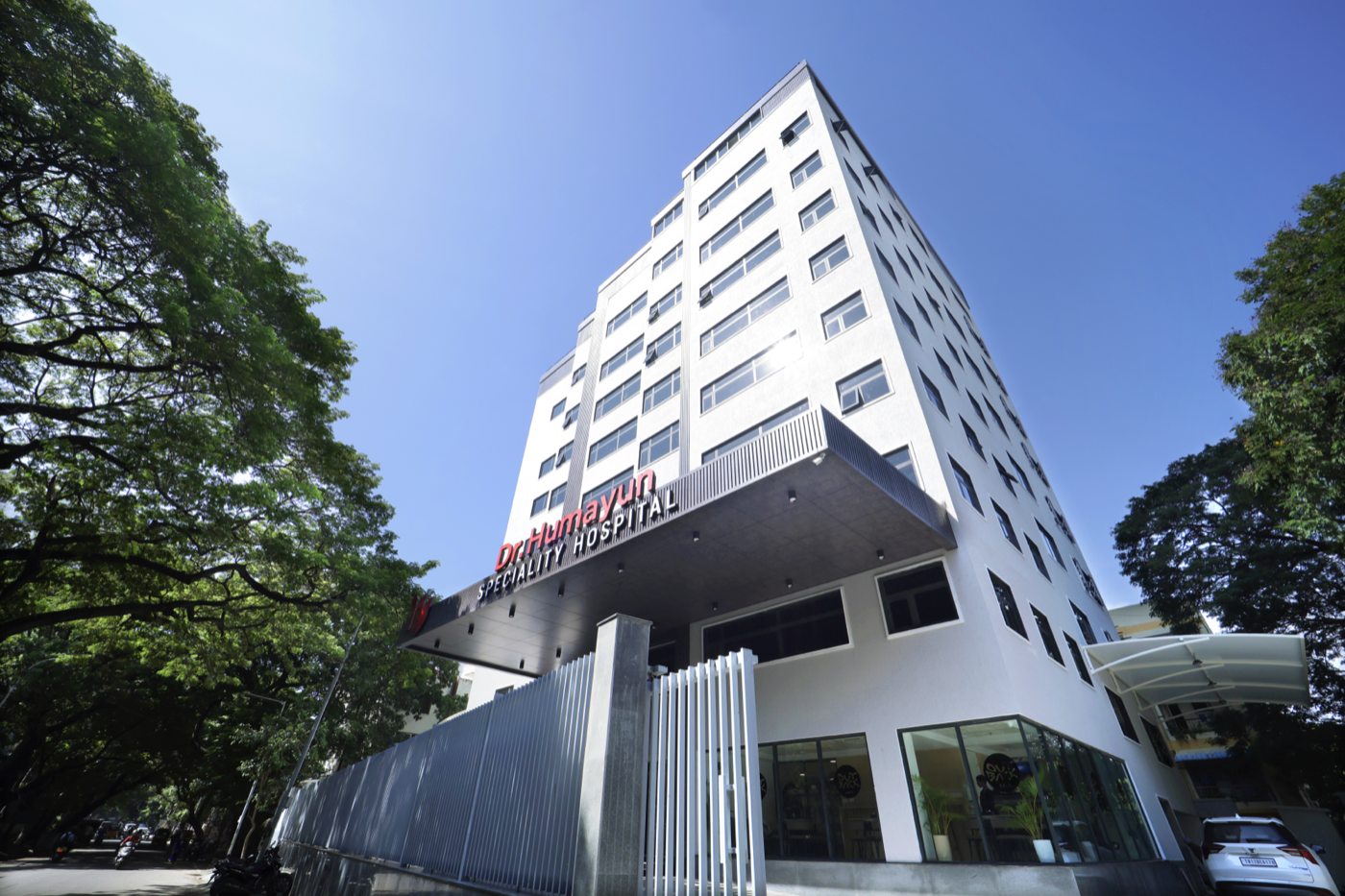
Why choose Humayun for therapeutic endoscopy
Bleeding from the gut is an emergency, and the endoscopy has to be available when it happens rather than on the next list.
- Emergency endoscopy available rather than waiting for a routine list
- Haemostasis equipment, clips and bands held on site
- Blood bank access and intensive care in the same building
- Surgical gastroenterology on hand for the minority where endoscopy is not enough
Your Health Matters
Take the next step towards better healthcare.
Connect with our experienced specialists and find the right care for you and your family.
More in Gastroenterology
Upper GI Endoscopy
A thin camera passed through the mouth to look directly at the food pipe, stomach and first part of the intestine.
Colonoscopy
A camera examination of the large bowel, used to investigate bleeding and changed bowel habit and to remove polyps.
Endoscopic Biopsy
Small tissue samples taken during an endoscopy so the diagnosis can be confirmed under a microscope.
Polypectomy
Removal of a polyp during colonoscopy, which prevents most bowel cancers rather than treating them.